PHI2394Written with Claude|AI can make mistakes
PHI 2394 B00 · reading for Wednesday 14 October

Where the Bias Gets In, and What Nobody Looked For

Two chapters for one class, since Monday is Thanksgiving. The first cuts research into nine steps and shows a value entering at almost every one. The second says what you do not know is often something somebody made.

23pages of chapter 4, printed pages 57 to 79
21pages of chapter 5, printed pages 80 to 100
1class. No class Monday 12, Thanksgiving
44pages in all, for one class

The argument

Last week asked whether who you are changes what gets known. This week asks where exactly it gets in, and what happens to the things nobody went looking for.

Two readings, two questions

Chapter 4 and chapter 5 ask opposite halves of the same thing.

The readingThe question it asksThe case it runs on
Chapter 4Crasnow and Intemann Where in a piece of research can a value get in, once you grant that method is supposed to keep it out? The rod and frame test, run on men and women from the 1950s to last year
Chapter 5Crasnow and Intemann How does not knowing something get produced, in the way a finding gets produced? Why there is still no hormonal contraceptive for men
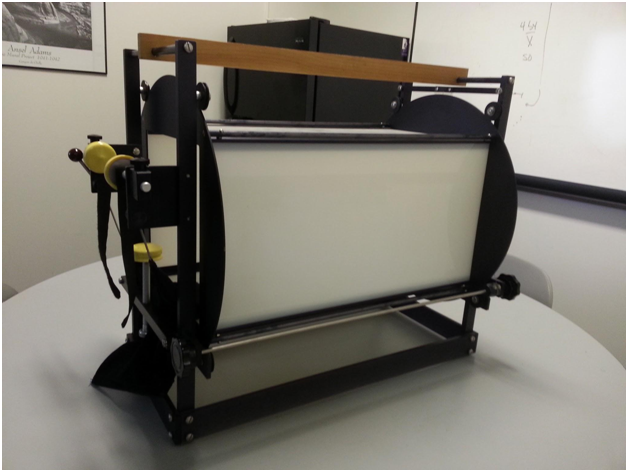
A black metal frame about the size of a suitcase, standing on a table. Inside it a
                      large white rectangular panel is mounted on pivots so it can be rotated, with
                      hand cranks and counterweights on the left side for tilting it.
A rod and frame apparatus. The white rectangle is the frame, and it pivots. A second control rotates the rod inside it. In the original version the room is black, both objects glow, and the chair you are sitting in tilts as well, so the frame is the only thing you have to judge by. ThsTorturedSoul, CC BY-SA 3.0, via Wikimedia Commons.

Here is the experiment the whole of chapter 4 is built around. You are shown into a completely dark room and sat in a chair that the experimenter, who is a man, can tilt to any angle. Two glowing objects appear in front of you, a rod and a rectangular frame, each tilted. Your job is to tell him how to move the rod until it stands at a right angle to the frame. You cannot touch it. You have to keep saying a bit more, no, back, a bit more, as many times as it takes, while sitting tilted in the dark with a stranger.

From the 1950s to the 1970s this was a standard way of testing whether men have better spatial ability than women. Men scored better, and the conclusion drawn was that male and female brains differ. Versions of the test are still in use, and papers from 2019 and 2022 still draw that conclusion.

Anne Fausto-Sterling's objection, in 1985, was one question: what is this measuring? Completing the task means being willing to keep making demands of a man you do not know, in the dark, while being tilted about. Women in the 1950s and 1960s were raised not to be demanding and not to make extra work for a man, and some would plainly have been uncomfortable alone in a dark room with a male stranger. None of that is a fact about the brain. Later studies that controlled for these problems found the gap between men and women shrank sharply.

The claim this week attacks Grant that scientists are ordinary people carrying ordinary opinions. It still makes no difference to the finding, because method sorts it out: follow the procedure, run the controls, and whatever you personally believe has been washed out by the time the result arrives.

Chapter 4 answers by asking where the method actually is. There is no single scientific method; there is a long chain of decisions, and the chapter cuts it into nine phases. What do I study, what question do I ask, what counts as a relevant observation, how do I collect it, what does it mean, when have I got enough, what do I conclude, what else might explain this, how do I check. A human being decides every one of those, and nothing in nature decides them. Run the rod and frame test down that chain and you can watch the answer being assembled: somebody decided the apparatus measures spatial ability, somebody read the score as a brain difference, somebody felt that was enough evidence because it was the expected result, and nobody thought of the assertiveness explanation, so nobody ruled it out.

The nine phases of research as a vertical chain, with the decision taken at each phase on the left and how it went wrong in the rod and frame test on the right. THE PHASE THE DECISION SOMEBODY TAKES THE ROD AND FRAME TEST CHAPTER 3 COVERED THESE 1  Choosing the subject 2  Framing the question 3  Which observations count What is worth studying, what to ask about it, and what would even be data. Assume brains come in two kinds. Assume the rod test measures space. THIS CHAPTER IS ABOUT THESE 4  Collecting the data 5  Interpreting it 6  Deciding when to stop 7  Drawing the conclusion 8  Alternative explanations 9  Checking it holds up How much evidence is enough depends on what it would cost to be wrong, which is a value judgment. And you can only weigh the rival explanations that occurred to you. Men score higher. Read as brain difference. Expected result, so less evidence felt like enough. Gap is small. Reported as significant anyway. The explanation nobody reached for A rival hypothesis you never thought of cannot be ruled out. The test measures who will keep making demands.
Nine places a decision gets made, and only one of them is the experiment. The traditional defence of objectivity is that method cancels out the person running it. The chapter's reply is that the method is this whole chain, that a person chooses at every link, and that nothing in the subject matter makes the choice for them. The highlighted block is where this chapter lives: chapter 3 handled the first three, and these six are the ones people assume are safe. The right column follows one real case down the chain, and the last row is the one that matters, because an explanation that never occurs to you is not an explanation you have ruled out.

Chapter 5 turns the question round. Epistemology asks how knowledge gets made. Agnotology, which is the study of ignorance, asks how ignorance gets made, and its claim is that not knowing something is often a product, where it looks like a gap.

The clearest case in the chapter is contraception. There is still no safe hormonal contraceptive for men. Not because it is hard. Because in the 1960s it was considered and dropped, on the grounds that men would not accept side effects like reduced libido, while nobody worried about reduced libido in women, since the standing assumption was that women did not have much desire anyway. Nancy Tuana sorts cases like that into five kinds, running from what nobody bothered to ask through to what cannot be known at all.

Next week carries both arguments into one science. Nelson's chapter, set for 19 to 21 October, runs chapter 4's question and chapter 5's question through biology over 150 years, and its second case study is the full version of the primatology story week 5 opened with.

What this leaves of objectivity If a value can enter at any link in the chain, objectivity can no longer mean a method that anyone could run with the same result, and it can no longer mean a researcher who holds no commitments. Longino, Harding and Wylie are three attempts to say what it could mean instead, and all three move it off the individual.

The reading

Two chapters of the book from last week, which are questions three and four of its six. Read both properly: there is only one class this week, on Wednesday 14 October, because Monday is Thanksgiving. Nelson on biology, which the first version of the reading guide put in this week, is in the week 7 guide where the revised one sets it.

CH 4How do we know?

Sharon Crasnow and Kristen Intemann, Feminist Epistemology and Philosophy of Science: An Introduction, Routledge, 2024
Read properly23 pp, printed pages 57 to 79
Why this chapter is set. It is the one with the machinery in it. Last week's chapter said the knower's position matters and left it as a claim; this one shows the exact points at which it can matter, and then gives three serious attempts to save objectivity anyway.

Two things called objectivity, and both are in trouble

The chapter uses two terms from chapter 3 constantly, so they are worth fixing now.

  • Methodological objectivity. Knowledge comes from methods that work reliably and that anyone could run and get the same answer. The procedure is what makes it trustworthy.
  • Agent objectivity. The person doing it should be detached, with no stake and no values in play. The researcher is what makes it trustworthy.

Both come from the same source, which the chapter calls the VFI. The value-free ideal is the view that good science has no social, political or moral commitments inside it anywhere. Every feminist position in this chapter rejects the VFI. Almost none of them give up objectivity, and that combination is the thing to be able to state.

And the chapter opens on a story that makes the stakes concrete. In 1912 the New York Times reported James Crichton-Browne, a prominent neuropsychologist who had worked with Darwin, on blood flow in male and female brains. Women came out with sensuous perception, rapid thought and emotional sensibility. Men came out with originality at the higher levels of intellectual work, calmer judgment and stronger will. The blood-flow theory is long dead. The thing it was used to prove, that cognitive differences between men and women are fixed by biology, has outlived every mechanism proposed for it: hormones, genes, brain structure. That survival is what the chapter wants explained.

The nine phases

You learn in school that the scientific method is: make a hypothesis, test it, conclude. The chapter says that is not false so much as useless, because the interesting decisions are hidden inside the word test. So it cuts inquiry into nine phases, following Anderson and Brown:

  1. Choosing the research area or subject.
  2. Framing the questions about it, which is where hypotheses come from.
  3. Deciding which observations are relevant.
  4. Collecting data based on those observations.
  5. Analysing or interpreting the data.
  6. Deciding when to stop collecting.
  7. Drawing conclusions from the evidence.
  8. Considering alternative explanations.
  9. Testing the conclusions for robustness.

Two warnings they attach to the list. The phases are not a sequence: research loops, and a decision at phase 7 sends you back to revise phase 3. And they interact, so how you conceived the object in phase 1 decides what counts as relevant in phase 3, which decides what there is to interpret in phase 5. Separating them is a tool for looking, and never a description of a timetable.

Chapter 3 covered phases 1 to 3. This chapter is about 4 to 9, and the authors say why: those are the controversial ones. Hardly anybody denies that scientists choose their topics for human reasons. The claim that values reach into collecting and interpreting the evidence is the one people fight about.

Example · the rod and frame test, which is the case to know cold

The apparatus. Built in 1948 by Witkin and Asch for something else entirely: telling apart people who judge how things are oriented by using the surroundings, called field-dependent, from people who can judge it without the surroundings, called field-independent. You sit in a completely dark room in a chair the experimenter can tilt. Two glowing objects appear, a rod and a frame, each tilted. Your job is to tell the experimenter how to move the rod until it cuts the frame at a right angle. Get it right whatever the tilt of the frame and your own chair, and you are field-independent, which was read as better visual and spatial skill.

What it was turned into. From the 1950s to the 1970s researchers used it to test whether men have better spatial ability than women. Men did better. The conclusion drawn was that men have superior visual-spatial abilities, and that the difference is biological. Versions of the test are still in use, and papers from 2019 and 2022 still draw the same conclusion.

Anne Fausto-Sterling's objection, from Myths of Gender, 1985. It is not clear what the test measures. Completing it requires sitting alone in the dark with a male experimenter and repeatedly telling him to make tiny adjustments until it is perfect. In the 1950s to 1970s, women were raised not to be demanding and not to make extra work for a man. Some were likely plain uncomfortable alone in a dark room with a male stranger. None of that is about the brain. So the measurement may be of who is willing to keep asking.

And the confirmation. Later studies that controlled for these problems found significantly smaller differences in spatial performance between men and women.
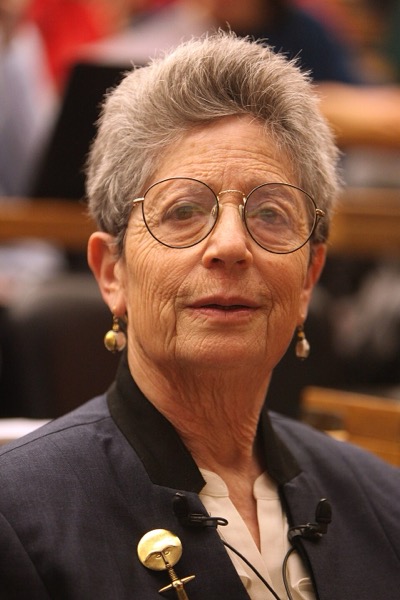
A woman with short grey hair and round glasses, wearing a dark jacket with a clip microphone and a large gold brooch, speaking in a lecture room.
Anne Fausto-Sterling, a biologist, who asked what the apparatus was measuring. Her objection is not that the researchers were sexist in any obvious sense. It is that the experiment put a social situation inside the measurement and nobody noticed, because the result came out the way everyone expected. Rama, CC BY-SA 3.0 FR, via Wikimedia Commons.

The rod and frame test, walked down the chain

Run the rod and frame test down the nine phases and you can watch the conclusion being assembled. Phases 1 and 2 were chapter 3's business. These are the six the authors say people fight about.

  1. Which observations count. Researchers assumed the rod and frame test is a measure of visual-spatial ability. That assumption is the whole experiment, and nobody ever argued for it.
  2. Collecting. They collected that men aligned the rod correctly more often. Correct, as far as it goes.
  3. Interpreting. They read that as men having better spatial cognition. The authors make a point here worth copying: the researchers also shared the widely held belief that men and women differ cognitively, which made that reading the easy one and every other reading the effortful one.
  4. When to stop. The chapter's key term lives in this phase, and it gets its own treatment below. The short version is that the expected result made less evidence feel like enough.
  5. Concluding. They concluded the difference could only be explained by biology. The authors call this unwarranted for a specific reason: the differences are small, even where they are statistically significant. Reporting the significance while leaving out the size is itself a choice about what matters.
  6. Alternatives, and this is the phase that does the damage. Social and environmental explanations existed. So did experimental error, meaning the test measures assertiveness. Neither was ruled out, because neither occurred to anybody. Concluding means inferring to the best explanation, and you can only compare the explanations you have thought of, so who is in the room changes how well supported the conclusion actually is.
  7. Robustness. The missing alternatives point at confounding variables, meaning factors other than the one you are studying that move with the thing you are measuring. Name them and you can design controls for them. Later studies did, and the gap shrank.
Phase 6 in detail, where inductive risk lives

Deciding you have enough evidence is a judgment about the risk of being wrong, and that is called inductive risk. How much evidence is enough depends on the probability the hypothesis is true and on what it would cost if you got it wrong. The second half is a value judgment. The authors run it both ways, which is what keeps it an argument:

  • Wrongly accept that spatial ability is biologically fixed by sex, and you reinforce a stereotype, which bears on whether girls are encouraged into mathematics, engineering and architecture. Those are well-paid fields, so the cost shows up in women's earnings. And because the stereotype is already everywhere, and people weight evidence that agrees with what they already think, the error spreads easily.
  • Wrongly reject it when it is true, and you lose the chance to understand a real difference and deal with it fairly, and you may back policies that cannot work.

Which error is worse is a value judgment, and somebody makes it every time. The practical rule the chapter offers: when the cost of error is high and nothing is urgent, collect more and avoid sweeping conclusions.

Why this is not a story about bad scientists In hindsight it is tempting to call this sloppy design, preconceptions and hasty conclusions. The authors refuse. These were peer-reviewed studies that still shape a live research field, and the two ways values entered, through inductive risk and through which alternatives come to mind, look like features of how knowledge gets produced at all. That is why the chapter cannot end by telling anybody to try harder.

So what could objectivity mean now?

The move the whole chapter turns on. The traditional question is how does an individual know objectively. Feminists replace it with what conditions have to be met for knowing to be objective. The property shifts off the person and onto the arrangement.

The first answer, and the one most people start with. Spontaneous feminist empiricism is Harding's name for the position that the standard methods are fine and the problem is that they were applied badly. Follow the procedures properly and the sexist values get filtered out. It keeps both traditional kinds of objectivity intact and treats bias as a failure of execution.

Why the chapter thinks that is not enough. Practices thought to be good science can carry values inside them, where nobody sees them, which is exactly the rod and frame test. And if values are unavoidable at some phases, the job is no longer to remove them. It is to tell the legitimate uses from the illegitimate ones, and the obvious line, values are fine in phases 1 and 2 and not after, does not hold, because the phases feed each other.

Longino: objectivity is a property of a community

Her account of evidence first, because the objectivity follows from it. Nothing is evidence on its own. A fact becomes evidence for a hypothesis only through background assumptions that connect the two. Change the assumptions and the same fact stops being evidence, or starts being evidence for something else. She calls this contextual empiricism: empiricist because only observable things count as evidence, contextual because what they are evidence of depends on the surrounding assumptions.

Example · housework, and a number that was not evidence of anything

The standard economic account. Women earn less, so they have less bargaining power at home, so they end up with the housework. Straightforward, and it predicts that as a woman's earnings rise her share of the housework falls.

What Julie Brines found in 1994. It does not. When women out-earn their male partners, the men do even less housework than before. On the bargaining account that number is not evidence for or against anything. It is a stray fact with nowhere to sit.

Now change the background assumption. Treat a marriage as somewhere people perform gender, on top of being somewhere two people negotiate over money. A man who is out-earned has failed at the breadwinner part, so he makes up for it by refusing the part that is coded female. The number becomes the central thing to be explained.

Same number, two contexts, and only in one of them is it evidence. The feminist commitment that gender is relevant is what made the fact visible. And the assumption it displaced, that a marriage is simply an economic arrangement, had been shared across the field, which is why nobody had been troubled by the anomaly.

The same finding about housework placed under two different background assumptions, where it is a stray fact under the first and the central thing to be explained under the second. THE FINDING, UNCHANGED When a woman out-earns her male partner, he does less housework than before. Julie Brines, 1994 ASSUMPTION A ASSUMPTION B A marriage is two people bargaining over money. A marriage is also somewhere gender is performed. More earnings, more bargaining power, less housework. The finding runs the wrong way and connects to nothing. A man who is out-earned has failed at the breadwinner part, so he refuses the part coded female. The finding is what needs explaining. A STRAY FACT EVIDENCE
Nothing is evidence on its own. The box at the top never changes. What changes is the assumption underneath, and with it whether the number is evidence for anything at all. This is contextual empiricism in one picture, and it is why Longino puts objectivity in the community: the assumption on the left was shared across the field, so nobody inside it was troubled by a fact that fitted nowhere. Seeing it took somebody who held a different one.

Then the objectivity. If what counts as evidence depends on assumptions, and assumptions are shared and invisible to the people who share them, then no individual can get out from under their own. The only thing that can is other people. So objectivity is a property of how a community is organised, and Longino names four conditions for what she calls transformative criticism:

  1. Public venues for criticism, of evidence, methods, assumptions and reasoning.
  2. Uptake. The community must not merely tolerate criticism but actually change its beliefs over time in response. This is the one that has teeth.
  3. Public standards for judging theories and observations, so criticism has something to appeal to.
  4. Tempered equality of intellectual authority. Take seriously anybody with the relevant expertise, and never dismiss them for gender, race or class. Tempered means expertise still counts: this is not a rule that every opinion weighs the same.

What this buys. Science is not value free and it does not have to be. The values get managed, by being made explicit and argued about in public, which Janet Kourany names the social value management ideal. And diversity now has an epistemic job, on top of the moral one: a community that all shares the same assumptions cannot see them, so difference is what makes criticism possible. Objectivity comes in degrees, since no real community meets the four conditions fully.

Two objections the chapter reports, and Kristina Rolin answers both.

  1. It lets in too many people, including people who reject the norms themselves. Rolin's reply: the four norms already rule out anyone who will not keep them.
  2. It costs too much. Answering every criticism would take all of a scientist's time. Rolin's reply: the norms put the duty to respond on the community, so its members can divide the work.

And the objection that matters most for this course. Kristen Intemann, one of this book's own authors, points out that the four norms ask a community to hold a range of values and say nothing about who is in it. So a department can satisfy all four while every member occupies the same social position, and the assumptions that come with that position never get raised by anybody, because there is nobody there who does not share them. The norms are silent about the thing that decides which criticisms turn up.

What her fix adds, in one line: who is in the room becomes an epistemic question. She keeps Longino, so a claim still answers to evidence and objectivity still belongs to a community working under the four norms. She adds standpoint theory's claim that people differently placed have access to different evidence, which supplies the answer Longino lacks to diverse in what respect. Diversity of social position stops being only a matter of fairness and becomes a condition on the evidence the community can reach. Intemann calls the result feminist standpoint empiricism: empiricist because evidence decides, standpoint because who is looking decides what evidence there is.

Longino, Harding and Wylie set out as three columns, each giving where objectivity is located, what the proposal is, and what it asks a researcher to do. LONGINO HARDING WYLIE IT IS A PROPERTY OF IT IS A PROPERTY OF IT IS A PROPERTY OF the community the vantage point the claim Four norms. Public criticism, real uptake, shared standards, and tempered equality of intellectual authority. Strong objectivity. Scrutinise every phase, including the aims, from the position of those the field has marginalised. Claims are objective in the degree they show epistemic virtues. You cannot maximise them all, so you choose. SO A RESEARCHER SO A RESEARCHER SO A RESEARCHER builds a community that can argue back. starts the enquiry from marginalised lives. says which virtues this project needs, and why.
Three answers to the same question, and they differ in what the word objective is attached to. For Longino it describes a community and its habits. For Harding it describes an enquiry that has been examined from the outside, which is why the vantage point matters. For Wylie it describes the claim itself, which is the most conservative of the three and the reason hers sits closest to ordinary empiricism. Wylie is highlighted because her version is the one that does not require you to accept anything about social position before you can use it, so it is the easiest to defend in a seminar.

Harding: strong objectivity

Her diagnosis, in her own words. The problem was that good science lacked the methodological resources to detect widely held sexist and androcentric assumptions. Androcentric means centred on men, treating male behaviour as the standard case. Good science, following the traditional standards, did not catch these, so the standards are what need fixing.

The engine of standpoint theory, which has a name. The inversion thesis: people who are socially, politically and economically subordinated are, because of that position, better placed to notice the assumptions researchers in dominant positions are making. Harding's line is uncompromising: a maximally critical study of scientists and their communities can be done only from the perspective of those whose lives have been marginalised by those communities.

Why that is more than a nice idea. Two mechanisms carry it, and both are concrete.

  1. You cannot see what you are seeing with. A person inside the dominant framework cannot inspect its assumptions, because those assumptions are the instrument.
  2. Marginalised knowers can state their own interests, so they can propose a different account of what the object of study even is.
Outsider-within
Patricia Hill Collins's term for a researcher who is marginalised and so holds two things at once: the field's own framework, and the lived experience of the people the field is studying.
Double consciousness
Seeing yourself through the dominant culture's eyes and through your own at the same time. It is what makes the mismatch between the two visible.
The sentence that saves the theory from being silly Epistemic advantage is not automatic. It does not come from identity or social position by itself. It comes from conscious awareness of the power relations that make up that position. Being a woman does not give you the standpoint; understanding how gender structures the field does.

Two sociologists as worked cases.

  1. Dorothy Smith found a mismatch between her subjects' lived experience and the concepts of traditional sociology. She called those mismatches lines of fault, and argued they are where the method should be rebuilt from.
  2. Patricia Hill Collins found that neither mainstream sociology nor white feminist accounts fitted the Black women she studied. That is how standpoint theory leads into intersectional analysis, where a weaker version of it would merely have tolerated it.

And the definition to write down. The two words are a pair, and the second is defined against the first.

Which objectivityWhat it asks of the researchWhich phases it covers
Weak Meet the traditional empiricist standards of evidence. Phases 3 to 7, collecting through concluding
Strong Scrutinise all of them, including whether the subject and the questions suit the goals of the research. For Harding those goals include the liberatory aims of feminism. All nine, and the aims behind them

Harding's own summary of the second one. Strong objectivity requires that scientists and their communities be integrated into democracy-advancing projects, for scientific and epistemological reasons as well as moral and political ones.

Wylie: objectivity is a property of claims

She starts from a complaint about the word. Ian Hacking called objective an elevator word, meaning a word that does no work of its own and only raises the standing of whatever it is attached to. Calling a result objective says it does not suffer from some failing, without saying what it has.

So she makes it mean something. Objectivity is a property of the knowledge claim itself, where the tradition hung it on the researcher. A claim is objective to the degree it shows the epistemic virtues, meaning the properties that make a claim good as knowledge. The standard list comes from Kuhn and from Longino.

  • Empirical adequacy. It fits the data.
  • Inferential robustness. The conclusion survives a change in the assumptions it was drawn from.
  • Explanatory power. It accounts for more of what needed accounting for.
  • Internal coherence. Its parts agree with each other.
  • Consistency with other established knowledge. It sits with what the field already holds.

And here is where standpoint gets in, which is the clever part. You can almost never maximise all the virtues at once. A model that fits the data best is often not the one that explains the most. So at every phase researchers must decide which virtues to prioritise for this project, and that decision depends on their purposes and goals, which depend on where they are standing. Standpoint improves objectivity by improving those judgments.

Her three theses, which are the tidiest summary of standpoint theory in the reading.

  1. The generic situated knowledge thesis. All knowledge comes from some social position. There is no view from nowhere.
  2. The systemic situated knowledge thesis. Social power is systematic, so the epistemic consequences are systematic too, and not random noise.
  3. The thesis of epistemic advantage. Particular insights may be available to those who are marginalised.

And her status claim. Standpoint theory is a purpose-specific epistemic stance and not a full-service epistemology: a tool to be used on particular problems, and never a replacement theory of knowledge. Harding's early work treated it as an alternative epistemology, Wylie rejects that, and Harding's later work has moved toward Wylie's view. Intemann calls the merged position feminist standpoint empiricism.

The pragmatists, and the chapter's own doubts

Miriam Solomon sorts feminist empiricism into two kinds by what values are allowed to do.

  • Gap feminist empiricism. Evidence never settles which theory to believe on its own, because theory is underdetermined by the evidence, meaning several theories fit the same data. Values break the tie. Longino's 1990 position is her example.
  • Feminist radical empiricism. The stronger claim: values are themselves empirical, so evidence bears on them the way it bears on any other belief, and they can serve as evidence in turn. Lynn Hankinson Nelson, Sharyn Clough and Elizabeth Anderson. The picture behind it is Quine's web of belief, where everything you hold answers to experience as one connected whole, and never one claim at a time. On this view sexist science fails because it is worse science, less empirically successful, and the failure of the whole system is what tests the values inside it.

The chapter then reports two objections to the stronger view and endorses neither. Solomon doubts you could ever isolate one bad value inside a holistic web to test it. Audrey Yap's worry is practical: even where evidence does tell against a value, people holding it tend not to give it up, so this is unlikely to work as a way of removing sexism and racism from research.

Example · the bias paradox, and how the chapter escapes it

The trap. Feminists reject research for carrying sexist values, and openly endorse feminist values in research. That looks like having it both ways. If values make research bad, feminist values make research bad too.

The escape, in three steps. First, they reject the value-free ideal, so they are not claiming values are bad as such, and the paradox never gets started. Second, the real complaint about sexist values is that they went unnoticed and unexamined, which is a procedural failure, and it happened because the communities were uniform and because feminist critics were not granted equal intellectual authority. Third, the sexist values are also unsupported empirically, held by few, and far short of the full range of interests science should serve.

So the objection is not that the other side had values. It is that nobody put theirs on the table where they could be argued about.

If you keep one thing. There is no single scientific method to be objective by: there is a chain of nine decisions, and a person makes every one. So objectivity cannot mean a procedure anyone could run with the same answer, and it cannot mean a researcher with no commitments. All three feminist answers move it somewhere else: to how a community argues (Longino), to where the enquiry is viewed from (Harding), or to which epistemic virtues a claim manages to show (Wylie). None of them gives up objectivity, and that is the point of the chapter.
Where it belongs in the quarrel
  • It answers week 4. Sismondo's chapter 6 said theories are built and the data does not pick them. This names the nine places the building happens.
  • It answers week 3. Kuhn said a community's shared commitments shape what counts as a problem. Longino's four norms are a proposal for what such a community should be like, which is the question Kuhn left open.
  • It is answered by the bias paradox, which is the strongest objection in the area and is dealt with in the chapter's conclusion.
  • It is continued by Nelson, below, which is the same argument told through one field over a century.
  • It sets up week 7, the Routledge Handbook chapters on values in science and on feminist science for the people.
My noteThis is the densest chapter of the term and the one most likely to supply short answers, so get three things cold: the nine phases in order, inductive risk with the two-sided example, and the three names with the one-line position each. The rod and frame test is the case for any question about method or bias, and it is better than the heart disease case because the mechanism is visible. If a question asks whether feminist epistemology is relativism, the answer lives in this chapter: all three accounts keep objectivity and relocate it, and the bias paradox section is the explicit reply. The three discussion questions printed at the end of the chapter are a free exam paper, and the third one, on inductive risk, is the hardest and the most likely.
For the curiousnone of this is on the exam
The test was built to study something else entirely

Herman Witkin and Solomon Asch built the rod and frame apparatus in 1948 to study how people tell which way is up, and whether they use vision or the balance organs in the inner ear. Field-dependence was a claim about perceptual style and said nothing about men and women.

Asch is better known for the conformity experiments of the early 1950s, where a subject surrounded by actors giving an obviously wrong answer about the length of a line often gave the wrong answer too. The common thread is that both men were studying how far a person's judgment bends to its surroundings, which makes the later use of the rod and frame test to measure a fixed brain property a particularly odd fate for it.

Inductive risk has been argued about since 1953

The paper the chapter cites is Richard Rudner's "The Scientist Qua Scientist Makes Value Judgments", 1953. His argument is three lines long. No hypothesis is ever certain. To accept one is to decide the evidence is strong enough. How strong is strong enough depends on how bad it would be to be wrong. So a scientist accepting a hypothesis has made a value judgment, as a scientist and not as a citizen.

Rudner's own example is the difference between a batch of machine parts and a batch of a polio vaccine. Nobody has ever answered the argument by showing the step is avoidable; the replies all try to move the decision somewhere else, usually onto the person who will act on the result. Heather Douglas revived it in 2000 and it is now one of the main arguments against the value-free ideal.

Longino’s fourth norm has a name problem

Tempered equality of intellectual authority is a careful phrase doing careful work. Drop tempered and it says every voice counts equally, which would mean a community obliged to take seriously anybody at all, and that is the over-inclusiveness objection the chapter reports. Drop equality and it says defer to the experts, which is what the norm exists to prevent, since the experts are the ones who all share the assumption nobody can see.

What it is reaching for: relevant expertise is what qualifies you, and nothing else disqualifies you. Having the expertise and being dismissed for your gender is the failure it names.
CH 5What don’t we know?

Sharon Crasnow and Kristen Intemann, Feminist Epistemology and Philosophy of Science: An Introduction, Routledge, 2024
Read properly21 pp, printed pages 80 to 100
Why this chapter is set. It is the one with a genuinely new idea in it. Everything else this term has been about how knowledge gets made; this flips the question and asks how not knowing gets made. The field has a name, a five-part taxonomy and five production strategies.

MeToo, and the question it opens

The facts the chapter uses. Tarana Burke began MeToo on social media in 2006, encouraging people to make their experiences of sexual assault and harassment public. It became enormous in 2017, when the actress Alyssa Milano pushed the hashtag during the accusations against the film producer Harvey Weinstein.

What the authors say it did, which is more interesting than what it is usually credited with. It made visible something most people had not known: how common sexual assault and harassment are, especially at work.

And it did something sharper. It gave survivors a way to see their own experience differently. Women who had described an encounter with an employer as consensual, including Monica Lewinsky and several NBC employees who worked with Matt Lauer, later said the consent had come partly from fear of what refusing would do to their careers. The movement handed people a concept, and with it the encounter changed shape.

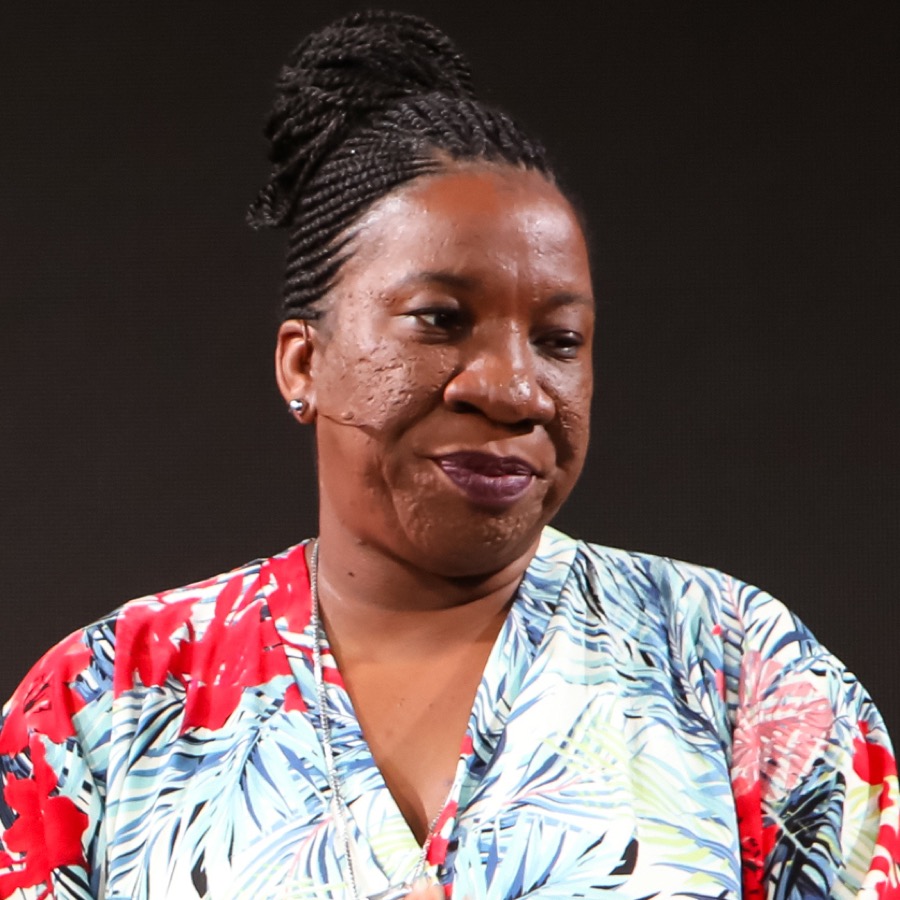
A woman with braided hair tied up, wearing a patterned shirt with red and blue leaves, looking to one side against a dark background.
Tarana Burke, who began MeToo in 2006, eleven years before it became a hashtag. The chapter uses the gap between the two dates deliberately. The facts did not change in 2017 and neither did the law. What changed was whose experience got taken up, which is the chapter's subject. MIT Media Lab, CC BY 2.0, via Wikimedia Commons.

And the same hashtag hid things. The surge of use by wealthy white celebrities made less visible the thing Burke's original movement was about: that women of colour, Indigenous women, trans women and other vulnerable women are targeted disproportionately.

The question that opens the field Sexual violence and the laws against it had existed for decades. So why did any of this count as news? How can facts stay unknown, or get obscured, for very large numbers of people at once?

Agnotology, and what most people get wrong about ignorance

The field. Agnotology is the study of ignorance: how it is produced and maintained. It got going in the 1990s with Robert Proctor, and feminists, critical race theorists and decolonial theorists developed a related line called epistemologies of ignorance. Sullivan and Tuana's definition: identifying the different forms of ignorance, examining how they are produced and sustained, and asking what role they play in knowledge practices.

Ignorance is not automatically bad, and the chapter spends real time on this. It is a tool as often as a failure.

  • Blinding a clinical trial. Nobody is told who got the drug, precisely so that knowing cannot bend the result.
  • Knowledge it would be wrong to get. You cannot force patients into a randomised trial of a surgical procedure, so some evidence will never exist, by agreement.
  • Knowledge that is dangerous. How to build a biological weapon is restricted on purpose.
  • Ordinary life. There are things said about you that you would rather not know.

And the claim that makes it a field. Some say ignorance is simply the absence of knowledge, or the lack of true beliefs, or uncertainty. The chapter's position, from Sullivan and Tuana and Proctor, is that this misses the interesting cases. Social and cultural forces leave gaps, and they also make certain things hard or impossible to know. Linda Alcoff's phrase is the one to keep: ignorance as a substantive epistemic practice in itself, and never merely a neglectful one.

ignorance is not something simple: it is not a simple lack, absence or emptiness, and it is not a passive state. Ignorance of this sort, the determined ignorance most white Americans have of American Indian tribes and clans, the ostrich-like ignorance most white Americans have of the histories of Asian peoples in this country, the impoverishing ignorance most white Americans have of Black language, ignorance of these sorts is a complex result of many acts and many negligences.Marilyn Frye, 1983, p. 118

Tuana’s five kinds of ignorance

Where it comes from. Nancy Tuana built the taxonomy out of the women's health movement of the 1970s and 1980s, which she describes as a movement of epistemological resistance: getting women knowledge about their own bodies, and attacking the production of ignorance about them. The five are in the order she gives them, and the order matters because it runs from passive to active and then out the other side.

Tuana's five kinds of ignorance as five rows, each with the kind, who is responsible for it, and the example from the chapter. THE KIND HOW IT HAPPENS TUANA’S EXAMPLE 1  What we don’t know     but don’t care to Considered, and rejected as not worth the money. No male hormonal contraceptive. 2  What we don’t know     that we don’t know Never came up as a thing to study at all. The anatomy of the clitoris. 3  What they don’t     want us to know Somebody knew and kept it back. Concealed risks of oestrogen in the pill. 4  What we don’t know     and don’t want to Active work to avoid finding out. White ignorance about racism. Woody Allen. 5  What we cannot know Real limits on perception, time, and shared experience. Loving ignorance.
Five kinds, running from inattention to refusal and then out the far side. The first two are about what never got asked and differ only in whether anybody considered it: male contraception was weighed up and dropped, while the clitoris was never treated as an object of study at all. The third is somebody else withholding. The fourth, highlighted, is the one the chapter spends most of its length on, because it is the only one where the ignorant person is doing the work. The fifth is no failure at all: it is the real limit, and Lugones turns it into a demand for respect where it could have been an excuse. Tuana says the list is not exhaustive and that one case can sit in several rows at once.
  1. What we do not know but do not care to. Since the 1960s hormonal contraception has been aimed at women and tested on women. Male hormonal contraception was considered and dropped. The reasoning was that men would be less motivated to use it and less willing to accept side effects, with reduced libido the example. Nobody worried about reduced libido in women, because of the standing assumption that women did not have much desire to begin with. Pharmaceutical companies also assumed preventing conception was women's work, so it looked unmarketable. We still have no safe effective male hormonal contraceptive, and what stopped it was a decision about who would buy it.
  2. What we do not know that we do not know. Hard to spot, and in hindsight it looks like the first. Tuana's case is the anatomy of the clitoris. Study of the genitals was organised around reproduction, the clitoris was taken to play no part in reproduction, and so it was not a thing to be ignorant about. Nobody rejected it as unworthy. It was never an object of enquiry at all.
  3. What they do not want us to know. The pharmaceutical industry concealing known risks and side effects of oestrogen in contraceptives, to protect its margins. The chapter notes that this kind is not automatically wrong, since restricted dangerous knowledge is also somebody deciding what you may not know.
A medical illustration of the clitoris seen from the front. A small rounded
                        glans sits at the top, and below it a much larger wishbone-shaped structure of
                        paired arms and paired bulbs spreads downward and outward on either side of the
                        urethral and vaginal openings. Six parts are labelled.
Tuana's second kind, drawn. The labelled glans at the top is the part a standard anatomy drawing showed, and everything below it, the paired crura and the bulbs of the vestibule, is the same organ again. It was absent from the textbooks for decades. Her point is that nobody weighed it up and rejected it as unimportant, which is what the first kind would be. Study of the genitals was organised around reproduction, the clitoris was taken to play no part in reproduction, and so it was not a thing anybody could be ignorant about. The full internal structure was not published until 1998. Amphis, vectorised by Marnanel, public domain, via Wikimedia Commons. Labels in the other seventeen languages removed.
Willful ignorance, kind 4, which the chapter spends most of its length on

What we do not know and do not want to. This is the only one of the five where the ignorant person is doing something, namely employing active strategies to avoid knowing, including neglecting evidence that would force the knowledge on them.

The mechanism Mills describes. Some white people do not know about their own privilege, and the claim goes further than that. They refuse to understand the conditions non-white people live under, and the institutions and beliefs underneath them. Where a society is structured by inequality, the dominant group has an interest in seeing the world as a place where inequality is justified or absent. People with advantages have an interest in believing the world is fair and that what they have is deserved, and no interest at all in learning otherwise, because of what that would imply.

White America remains unable to believe that Black America's grievances are real; they are unable to believe this because they cannot face what this fact says about themselves and their country.James Baldwin, 1985, p. 536

Elizabeth Spelman's analysis of how that works in practice. It is a failure of interest and a gap in experience, and then something more active. When confronted with testimony or evidence, people immunise themselves against anything that would correct them. Evidence of police brutality gets discredited, the suspect must have been doing something, or dismissed, the force was reasonable because they did not comply. Only in extreme cases with inescapable evidence, such as the videos of the murder of George Floyd in 2020, is a wrong widely acknowledged, and even then it is treated as exceptional, where it could be read as evidence of a pattern.

And the distinction worth having, because it is subtle. Self-deception is convincing yourself something is true because you want it to be. Willful ignorance is different: you fear it might be true, you have an interest in not believing it, so you avoid the question altogether and build ways of minimising whatever evidence turns up. Tuana's phrase for it is an active ignoring of the oppression of others and one's own role in it.

Example · the one the chapter builds to, and it is uncomfortable on purpose

The setting. At the height of MeToo, Hollywood condemned Weinstein and declared that survivors should be believed. Many of the same people said nothing about Woody Allen, or defended him.

What the chapter lays out. Dylan Farrow has accused Allen, her adoptive father, of sexually assaulting her in 1992 when she was seven, consistently for over twenty years. Allen denies it and says she was coached by her mother Mia Farrow out of anger at his relationship with another of her adopted daughters. The chapter's point is that this is not a word against a word: multiple friends and family witnessed a pattern of inappropriate behaviour before the alleged assault, which led him into therapy; three eyewitnesses corroborated her account; experts found no sign her memory was the product of suggestion; a judge denied him custody because of the risk; and a prosecutor found probable cause and declined to charge only out of concern about putting a traumatised child through a trial.

The two quotations put side by side, which is the whole argument. Kate Winslet on Weinstein in 2017: the women speaking out are incredibly brave and it has been deeply shocking to hear. Kate Winslet on Allen, the same year, while starring in his film: she did not know him or anything about that family, you step away and say you do not know whether any of it is true or false, you put it to one side and work with the person, and he is an incredible director. Blake Lively on Weinstein: people who share their stories have to be listened to and trusted and taken seriously. Blake Lively on Allen: it is very dangerous to factor in things you do not know anything about.

What the authors draw from it. Neither is prepared to say the allegations are false, because that would mean weighing Dylan Farrow's testimony, which in the other context they said should be believed. They have no interest in its being true, since that would cost a career opportunity or make them complicit. So the comfortable position is not knowing: actively ignoring the evidence and reaching no conclusion in either direction.

Loving ignorance, kind 5, which asks something of the reader

What we cannot know. The one kind that is no failing at all. There are limits on what humans can perceive, limits of time and money, and limits on understanding experiences you have not had. Maria Lugones and Mariana Ortega call the right response loving ignorance: accepting that some experience cannot be fully shared, while refusing to ignore, dismiss or stereotype the people whose it is. Lugones calls for a loving perception of those who have been marginalised. Ortega sharpens it: many white feminists think reading about the experiences of women of colour is enough, and that reading produces its own arrogance, a confidence that you now understand. What she asks for instead is sustained engagement and real relationships.

Tuana's own caveat The list is not exhaustive, and one phenomenon can occupy several rows at once. White ignorance can be not caring to know, or blocked by present interests, or willful, or lovingly ignorant even in somebody actively anti-racist, because they can never fully know what it is to live as a Black person in a racist society.

The five ways ignorance gets made

Cutting across the five kinds, the chapter names five strategies. These answer how, where the taxonomy answered what.

1. Neglect, which is simply not studying something

Passive when a question never occurs to anyone, active when somebody chooses to look away. Three cases from the chapter:

  • Fossils in the ancient Mediterranean. Adrienne Mayor shows the accounts existed. The history of science passed over them because scholars disregarded non-elite sources and filed them as folklore, so modern palaeontologists were ignorant of the earliest fossil discoveries.
  • What the news covers. Media choose which stories to run, which is part of why people on different news diets believe different things.
  • Which parts of United States history get taught. The chapter's longest case, and it notes that neglect happens across the political spectrum: the Democratic Party's 2016 decision to concentrate on urban and suburban voters left its own officials systematically ignorant about rural conditions.
2. Suppression, where the knowledge exists and fails to travel

Four routes, and only the first is the obvious one.

  • Active. Bans on teaching certain topics, or classification of dangerous material.
  • Scientific. Data or methods are not shared, under commercial confidentiality or claimed national security.
  • Chosen by the marginalised themselves. Mayor records Native American groups withholding fossil knowledge from outsiders, and many Navajo avoiding anything to do with death, including dinosaur fossils on their land.
  • Language and form. Latin American feminist philosophy stays invisible to Anglophone scholars, and Indigenous oral histories get excluded as unreliable.

And the fifth route, citation, which has the chapter's sharpest example. Cuvier wrote up Iroquois and Delaware accounts of mastodon fossils, calling the mastodon the grandfather of the buffalo. When his work was translated into English twenty years later that entire section was left out, which made North American fossil discovery look European and fed the story that nobody was there before.

3. Discrediting, which has two targets

Attacking the knowledge. Indigenous and local knowledge gets dismissed as myth for not arriving as written-up hypotheses, despite Micronesian navigation systems, Indigenous pharmacology that was then exploited, and conservation findings repeatedly rediscovered from traditional ecological knowledge. The chapter names the assumption underneath this the scientification of knowledge: that only the products of Western science count. Midwives are the clearest case, their experiential knowledge dismissed as unscientific and unskilled as obstetrics professionalised in the nineteenth century, with licensing restrictions that still exist.

The main technique is uncertainty, which is the tobacco strategy. Executives knew they did not have to show smoking was safe, only that the science was unsettled. They funded conflicting research, exaggerated the uncertainties, and put non-scientists on television to attack the science.

Think tank
An organisation that employs researchers to publish reports and policy arguments, funded by whoever chose to fund it. It has no students and no requirement to be peer reviewed, and its output looks like scholarship, which is what makes it useful to somebody who wants a conclusion to appear independent.

Attacking the knower works through dismissal for an irrelevant feature: Indigenous people as savages, women as incapable, and more subtly the senators who said they believed Christine Blasey Ford had been attacked while doubting her memory of by whom. It can also target institutions, since claims of fake news aim to leave people not knowing what to trust at all.

The difficulty the chapter raises against itself Discrediting mimics reasonable practice. It is often right to ask whether a witness is credible or an expert qualified, and their example of a fair challenge is Scott Atlas, a radiologist with no training in epidemiology, advising the White House on masks. Telling fair criticism from the other kind is genuinely hard, because people doing the second kind phrase it as the first, and the chapter says plainly that this needs more work.
4. Disinformation, meaning outright false claims

What is new is the speed and the scale. Fabricated stories, sites and images spread worldwide in seconds and keep spreading after a platform flags them. Three things amplify it: lack of trust, social networks built on shared values, and algorithms that feed you what your clicks predict you will like. Add confirmation bias, the tendency to weight evidence that agrees with you, and you get information silos, echo chambers and what C. Thi Nguyen calls epistemic bubbles.

5. Selective representation, which is the subtlest of the five

Misleading with things that are true. Four cases, and the second is the one to remember:

  • The party. A teenager says there will be adult supervision and leaves out that the chaperone is a friend's twenty-one-year-old sibling.
  • The drug. A company reports that patients taking it for five years had a 95 per cent survival rate, and does not mention that the rate was also 95 per cent at two years, so patients buy three extra years of a drug for nothing.
  • The heavy metals. Chemical companies funded studies showing less testicular cancer in rats at low doses, implying low doses are good for men, while never checking whether other cancers rose at the same doses.
  • Political advertising, which does the same with quotations and voting records.
A survival curve that is flat from year two to year five, so a ninety-five per cent figure quoted at five years is the same number as at two years and reports no benefit from the three years between. SURVIVING, PER CENT 100 95 90 year 2 year 5 nothing happens along here start of treatment Reported: 95 per cent of patients taking the drug for five years were alive. Left out: so were 95 per cent at two years.
Both sentences are true, and one of them sells three years of a drug. This is the chapter's clearest case of selective representation, and the thing to notice is that no figure in it is wrong. The five-year survival rate is accurate. It is quoted without the two-year rate, which is identical, so the reader supplies the only reason anybody would mention it. The flat stretch is the whole argument, and it is the part that never appears in the advertisement.
If you keep one thing. Ignorance is usually treated as the empty space where knowledge has not reached yet, and the chapter's claim is that the interesting cases are made, where they look left over: by not funding a question, by never framing one, by hiding an answer, by refusing to look, and by telling true things that mislead. The test case is male contraception, which does not exist because somebody decided it would not sell. Knowledge is power, so what nobody knows is power too, and keeping something unknown keeps things as they are.
Where it belongs in the quarrel
  • It extends chapter 4 directly. The nine phases explain how what is studied gets chosen. This chapter follows what happens to everything that was not chosen.
  • It answers week 4's Sismondo. Construction accounts say knowledge is built. This says the gaps are built too, by the same kinds of forces.
  • It is answered by a worry about the word. If almost any gap can be redescribed as produced, the category risks covering everything, which is why the chapter spends so long on ignorance that is benign or unavoidable.
  • It sets up chapter 6, which is weeks 8 and 9 territory: what harms this does, and the idea of epistemic injustice.
My noteLearn Tuana's five in order and the five production strategies, because a list that has a number attached is the easiest thing in the world to ask for. Pair each with one example and you are safe: male contraception, the clitoris, the oestrogen risks, white ignorance, loving ignorance; then fossils, Cuvier's missing chapter, the tobacco uncertainty strategy, epistemic bubbles, the five-year drug. The Woody Allen section is the most striking thing in the chapter and is the one to use if a question asks for willful ignorance, because the two pairs of quotations do the work by themselves. Note also that this chapter is the one that reaches furthest outside feminism, into race, disability and colonialism, which is the fourth commitment from last week's chapter 1 doing visible work.
For the curiousnone of this is on the exam
The clitoris case is worse than the chapter has room to say

The full internal anatomy was not published until 1998, by the Australian urologist Helen O'Connell, who used magnetic resonance imaging to show that most of the organ is internal and several times larger than the visible part. Her finding was that standard anatomy textbooks had been shrinking or omitting it for decades, and that nerve-sparing techniques developed for prostate surgery had no equivalent in pelvic surgery on women.

The structure had in fact been described reasonably well by Georg Kobelt in 1844. It was then progressively dropped from the textbooks, which is a different and stranger thing than never having been found. Tuana's category two covers the first disappearance; the second looks more like category one.

The male contraceptive keeps nearly arriving

A World Health Organization trial of a hormonal injection for men reported in 2016 with about 96 per cent effectiveness. It was stopped early by its safety committee over side effects, mostly acne, mood changes and depression, although a large majority of the men in it said they would use it.

The comparison people reach for is that the combined pill for women was approved in 1960 with side effects including a real risk of clots, and that the threshold applied to the two has never been the same. The point is not that the committee was wrong but that what counts as an acceptable side effect is a judgment, which is the inductive risk argument from chapter 4 turning up in a different chapter.

Cuvier is a strange hero for this story

Georges Cuvier, who comes out well in the chapter for recording and crediting Indigenous fossil accounts, is the same man who established extinction as a fact and effectively founded comparative anatomy, and also the man who dissected Sarah Baartman after her death in 1815 and published a racial anatomy of her, work now treated as a notorious example of scientific racism. Her remains were held by a Paris museum until 2002.

Both things are true of one person, and neither cancels the other. It is a useful case against reading a historical figure as simply good or simply bad, which is a habit this course keeps trying to break.

Glossary

Every term in this guide, defined29 of them

How do we knowch. 4

methodological objectivity
Knowledge comes from reliable methods that anyone could run and get the same answer. The procedure is what makes it trustworthy.
agent objectivity
The researcher should be detached, with no stake and no values in play. The person is what makes it trustworthy.
the value-free ideal, VFI
Good science has no social, political or moral commitments in it anywhere. Every position in this chapter rejects it, and almost none give up objectivity.
the nine phases
Choosing the subject, framing the questions, deciding what is relevant, collecting, interpreting, deciding when to stop, concluding, considering alternatives, testing robustness. They loop and they feed each other.
inductive risk
Deciding you have enough evidence is a judgment about the cost of being wrong, which is a value judgment. Rudner 1953, revived by Douglas.
confounding variable
A factor other than the one being studied that moves with the behaviour being measured, so it can mask or imitate a real effect. Naming one is what lets you control for it.
spontaneous feminist empiricism
Harding's name for the view that the standard methods are fine and bias is a failure of execution. Keeps both traditional kinds of objectivity.
contextual empiricism
Longino. Nothing is evidence by itself: a fact becomes evidence for a hypothesis only through background assumptions that connect them.
transformative criticism
Longino's four norms: public venues for criticism, real uptake, public standards, and tempered equality of intellectual authority.
tempered equality of intellectual authority
Take seriously anyone with the relevant expertise, and dismiss nobody for gender, race or class. Tempered means expertise still counts.
the social value management ideal
Kourany's name for Longino's proposal. Values are not removed from science; they are made explicit and argued about in public.
the inversion thesis
The engine of standpoint theory. Those who are subordinated are, because of that position, better placed to see the assumptions researchers in dominant positions are making.
strong objectivity
Harding. Scrutinising every phase, including whether the subject and questions suit the goals of the research. Weak objectivity is meeting the traditional standards of evidence, which covers phases 3 to 7.
outsider-within
Collins. A marginalised researcher holds the field's framework and the lived experience of those studied at once, and the mismatch is what they can see. Double consciousness is the name for holding both.
epistemic advantage
What standpoint claims for marginalised knowers. It is never automatic and never comes from identity alone: it requires conscious awareness of the power relations making up that position.
elevator word
Hacking. A word that does no work of its own and only raises the standing of whatever it is attached to. His charge against objective.
epistemic virtues
What makes a claim good as knowledge: empirical adequacy, inferential robustness, explanatory power, internal coherence, consistency with established knowledge. Wylie's point is that you cannot maximise them all at once.
underdetermination
The evidence never picks out one theory on its own, because several fit the same data. What gap feminist empiricism says values are for.
feminist radical empiricism
The stronger claim that values are themselves empirical, so evidence bears on them and they can serve as evidence. Nelson, Clough, Anderson. Behind it is Quine's web of belief.
the bias paradox
Feminists reject research for carrying values while endorsing feminist values. The escape: they never claimed values are bad as such, and the complaint is that the sexist ones went unexamined.

What don’t we knowch. 5

think tank
An organisation that employs researchers to publish reports and policy arguments, funded by whoever chose to fund it, with no students and no requirement to be peer reviewed. Its output looks like scholarship, which is what makes it the vehicle for the uncertainty strategy.
agnotology
The study of ignorance: how it is produced and maintained. Proctor, 1990s. The feminist line is called epistemologies of ignorance.
Tuana’s five kinds
What we do not know but do not care to; what we do not know that we do not know; what they do not want us to know; what we do not know and do not want to; what we cannot know.
willful ignorance
The fourth kind. Active strategies to avoid knowing, including neglecting evidence. Distinct from self-deception, which is convincing yourself of something you want to be true.
white ignorance
Mills. Not a gap but a refusal to understand the conditions non-white people live under, maintained because the dominant group has an interest in the world looking fair.
loving ignorance
Lugones and Ortega. Accepting that some experience cannot be fully shared, while refusing to ignore or stereotype the people whose it is. Reading about it is not enough and produces its own arrogance.
the five strategies
How ignorance gets made: neglect, suppression, discrediting, disinformation, selective representation.
the scientification of knowledge
The assumption that only the products of Western science count as knowledge, which is how Indigenous and experiential knowing gets discredited as folklore.
epistemic bubble
Nguyen. Where access to counter-evidence is limited or discouraged, built out of cognitive bias, trusted networks and recommendation algorithms.
Where this goes. Week 6 of thirteen, with the first exam behind and the second five weeks away:
Week 7
Oct 19 to 21. Four chapters of the Routledge Handbook: ch. 3 on Émilie Du Châtelet (p. 39), ch. 20 feminist philosophy of biology (p. 263), which is the Nelson chapter above, ch. 15 feminist perspectives on values in science (p. 201), and ch. 19 feminist science for the people (p. 250). Then reading week, Oct 25 to 31
Weeks 8 to 9
Feminist philosophy of disability. Tremain on Foucault, power and normalization, which is chapter 6 of this book in another form · Exam 2, Wed 11 Nov, 30%
Weeks 10 to 12
Animal minds, human and non-human. Andrews, The Animal Mind. Nelson's primatology is the bridge into it
Week 13
Review and exam prep · Final, 40%, date set by the Registrar
Sources. Sharon Crasnow and Kristen Intemann, Feminist Epistemology and Philosophy of Science: An Introduction, Routledge 2024, chapters 4 and 5, printed pages 57 to 100. Lynn Hankinson Nelson, Feminist Philosophy of Biology, in Crasnow and Intemann (eds), The Routledge Handbook of Feminist Philosophy of Science, Routledge 2020, pages 263 to 274. Both through the uOttawa library. Page numbers are the printed ones, and none of the three chapters carries a figure of its own.
Lecture notes